

Group Light
The Watergrove Trust is committed to “Providing More” – supporting both staff and learners’s understanding of “who they are”, so that they can interact effectively and authentically in the world.
Group Light supports this mission. The digital, evidence informed tool involves gathering a set of data to enhance communication, problem-solving, and decision-making skills. It is accessible enough to be enacted in any team or classroom and comes with delivery and coaching support to enhance effectiveness in a range of settings.

What is the evidence behind Group Light and what does it involve?
Based on the theories devised by Eric Berne and Susannah Temple, the user is asked to identify from a list, words that they can associate themselves saying; themselves in their entirety (so both them at home and at school/ work) whilst also examining the nuances of tone, gesture and attitude. Other colleagues, or learners, then complete the Group Light tool with the user in mind.
In a matter of minutes, a digitised bar chart figure is produced.
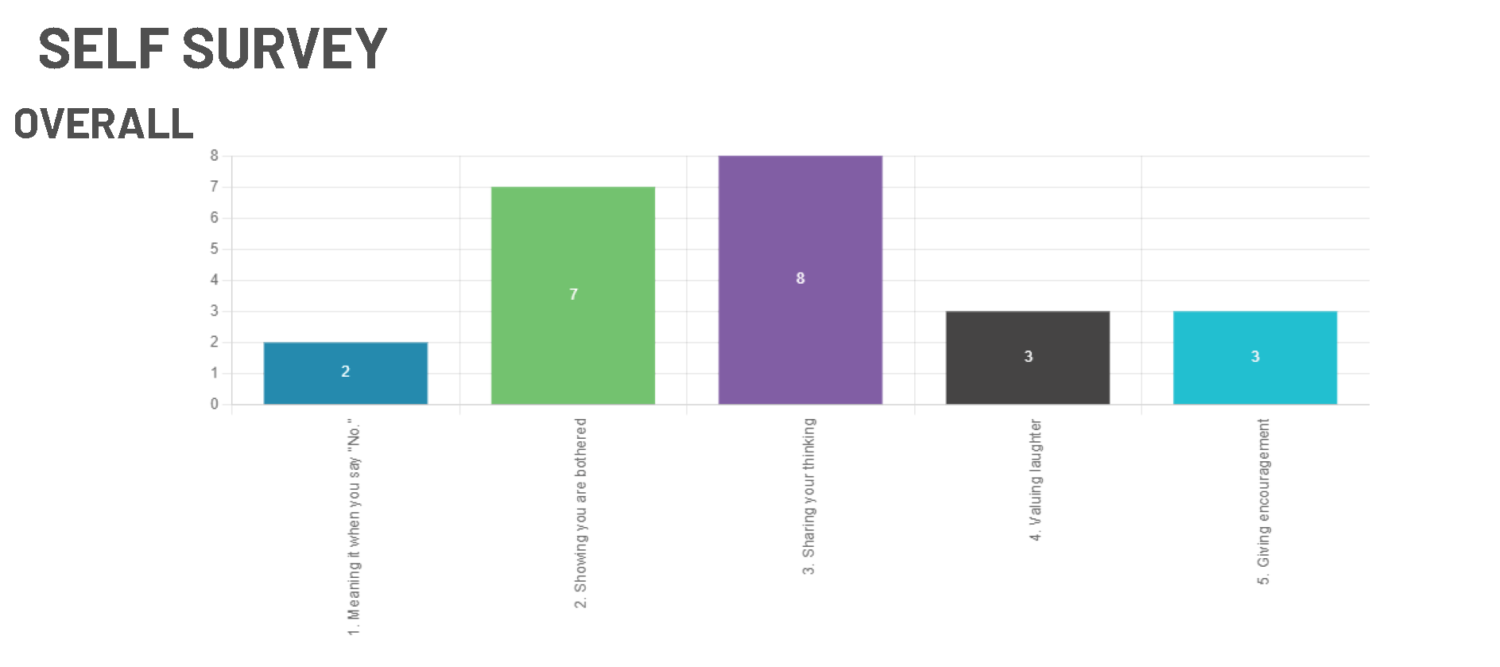
The height of each bar in “self” depicts five data points:
- The extent the user feels at ease with setting boundaries and expectations;
- Their ease at offering comfort and reassurance to others through their communication.
- The user’s self-evaluation of a mode of thinking and behaving that is rational, objective, and reality-oriented. To what extent they interact with others in a mature, respectful and responsible manner.
- The user’s self-evaluation of their spontaneity, playfulness, and authentic expression.
- Reflects the self-evaluation of their compliance, conformity and desire to please others. It reflects the socially-conditioned behaviours of manners, adaptation and social conditioning.
The user then compares this viewpoint with how others see them connect in the workplace.
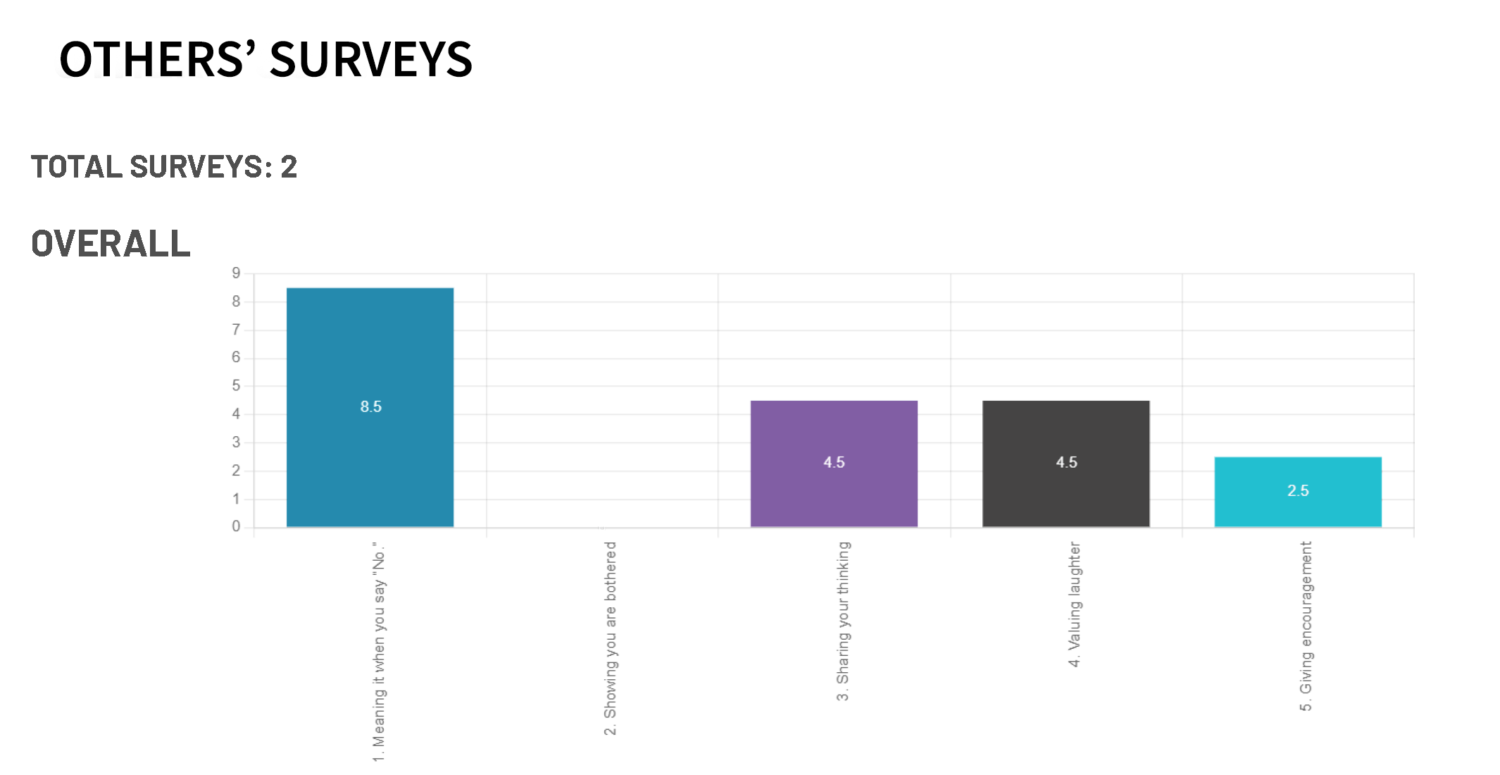
These two view-points provide an individual with an unusually rich insight into how they both see themselves and land in the world, generating powerful questions such as:
- Does my self-evaluation match the peer-evaluation from colleagues or learners?
- What is congruent and what isn’t?
- Why might this be?
- What are my next steps?
Such reflections can be used as a basis for group reflection and discussions or can be used as a basis for one to one coaching as part of a wider leadership development programme.
How can I access the tool?
The Group Light tool can be used in isolation or embedded into a wider leadership development programme. Its simplicity means that it can be tailored completely to your team or learners’ needs.
Please get in touch by emailing grouplight@watergrovetrust.co.uk to find out more about what Group Light can do for your teams.
References:
Berne, E. (1964) Games People Play: The Psychology of Human Relationships. Grove Press, New York.Temple, S. (2015). Celebrating Functional Fluency and Its Contribution to Transactional Analysis Theory. Transactional Analysis Journal, 45(1), 10–22. https://doi.org/10.1177/0362153714568803


